
The Cave You Fear To Enter
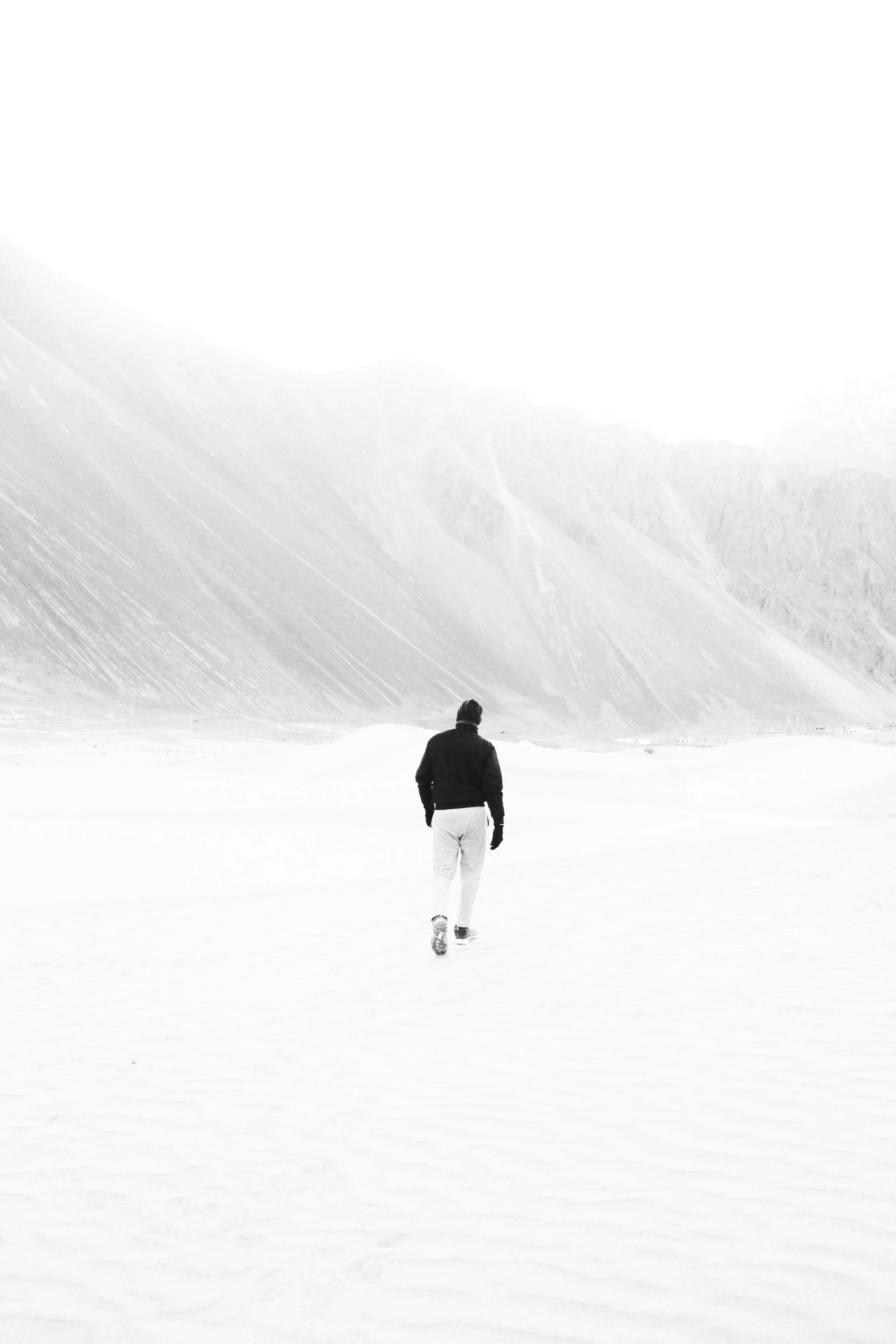
“The cave you fear to enter holds the treasure you seek.” (Joseph Campbell)
Most people believe they are afraid of pain.
They are not.
What they fear is stillness.
Stillness is where the self appears, unaccompanied, unedited, unperformed. It’s where the noise drops and the inner life steps forward without distraction. For many of us, this has never felt neutral. It has felt dangerous.
So we keep moving.
We stay busy. We stay connected. We stay stimulated. We intellectualise, spiritualise, optimise. We build relationships, routines, identities, even healing practices that keep us just far enough away from the quiet place where something essential waits.
This is what Joseph Campbell was pointing to when he spoke of the cave.
The cave is not trauma itself. It’s interiority.
It’s the place where the false self dissolves, where the roles we learned to survive begin to loosen their grip. It’s where the nervous system no longer has anything to lean on but the truth of what is present.
And that is precisely why we fear it.
For many people, stillness was never safe. In early life, being alone with oneself may have meant being overwhelmed by feeling, abandoned in distress, or left without attunement or containment. There was no one to help metabolise fear, grief, anger, or longing. So the system learned a simple lesson: do not stop. Keep moving. Keep adapting. Keep scanning outward for regulation.
What begins as survival becomes a way of life.
The modern world is exquisitely designed to support this avoidance. Productivity, pleasure, performance, spirituality-as-aesthetic - all offer ways to stay in motion while convincing ourselves we’re evolving. But movement is not the same as growth. And transcendence is not the same as integration.
Eventually, life brings us to the threshold.
The distractions stop working. The relationship ends. The substance loses its magic. The achievement feels hollow. The noise no longer numbs. This is often experienced as a crisis, but in mythic terms it’s an invitation, the moment the hero is called inward.
Most people resist it.
They double down on escape. They look for a new high, a new story, a new identity. But the cave remains. Patient. Unmoved. Waiting.
What we imagine lives inside the cave is usually monstrous. We expect to find unbearable pain, shame, or something fundamentally broken. But this is a misunderstanding.
What waits inside is not the worst of us but the truest version of ourselves.
Grief that was never witnessed.
Anger that was never permitted.
Longing that never found language.
Tenderness that had nowhere to land.
These parts do not want to destroy us. They want to be felt, named, and integrated. The treasure Campbell speaks of is not bliss or enlightenment. It’s wholeness. It’s the end of fragmentation.
Entering the cave does not mean collapsing into suffering. It means staying present long enough for the nervous system to learn something new: that stillness is not annihilation, that feeling does not equal danger, that the self can be inhabited without being escaped.
This is slow work. Unimpressive work. Work that rarely photographs well.
And it’s transformative.
You do not remain in the cave. You are not meant to live there. You enter, you listen, you gather what is essential and you return changed. Less reactive. Less performative. More rooted. More capable of discernment, intimacy, and truth.
The person who emerges is not unscarred, but they are integrated. They no longer need to outrun themselves. They no longer mistake movement for meaning.
The cave was never the enemy, avoidance was, and the treasure you feared would undo you was always the self you were trying to find.
Sometimes the path forward is the one that turns inward first.